Paradise
Lost
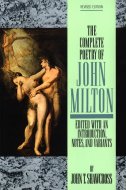
By John Milton
Bibliographical Information:
Milton, John.
Anchor Books,
Read Text of Poem: .txt file
Readability:
Low
to Medium-Low. A multi-thousand
line epic poem written in blank verse and metered in iambic pentameter would
be difficult to read regardless of the subject matter. While this poetic style functions as an appropriate
framework for
0-60 rating: Page 1, Line 1. If you manage to keep a firm grasp of what is actually being said and going on, Paradise Lost is as powerfully dramatic and epic as any tale in literature. But the pacing of the poem is uneven. The poetic style both enhances and hinders the flow of the tale, with scenes of high drama brilliantly captured by a memorable turn of phrase, often followed by meandering pastoral descriptions that distract the reader and dilute the impact of the tale.
Primary Narrative Perspectives: Reliable third person omniscient.
Representative
Passages:
Of Mans First Disobedience, and the Fruit
Of that Forbidden Tree, whose mortal tast
Brought Death into the World, and all our woe,
With loss of Eden, till one greater Man
Restore us, and regain the blissful Seat,
Sing Heav'nly Muse, that on the secret top
Of Oreb, or of Sinai, didst
inspire
That Shepherd, who first taught the chosen Seed,
In the Beginning how the Heav'ns and Earth
Rose out of Chaos.
Book 1, 1-10
Said then the lost Arch Angel, this the seat
That we must change for Heav'n, this mournful gloom
For that celestial light? Be it so, since hee
Who now is Sovran can dispose and bid
What shall be right: fardest from him is best
Whom reason hath equald, force hath made supream
Above his equals. Farewel happy Fields
Where Joy for ever dwells: Hail horrours,
hail
Infernal world, and thou profoundest Hell
Receive thy new Possessor: One who brings
A mind not to be chang'd by Place or Time.
The mind is its own place, and in it self
Can make a Heav'n of Hell, a Hell of Heav'n.
What matter where, if I be still the same,
And what I should be, all but less then hee
Whom Thunder hath made greater? Here at least
We shall be free; th' Almighty
hath not built
Here for his envy, will not drive us hence:
Here we may reign secure, and in my choyce
To reign is worth ambition though in Hell:
Better to reign in Hell, then serve in Heav'n.
Book I, 242-263
But in her Cheek distemper flushing glowd.
On th' other side, Adam,
soon as he heard
The fatal Trespass don by Eve, amaz'd,
Astonied stood and
Blank, while horror chill
Ran through his veins, and all his joynts relax'd;
From his slack hand the Garland wreath'd for
Eve
Down drop'd, and all the faded Roses shed:
Speechless he stood and pale, till thus at length
First to himself he inward silence broke.
O fairest of Creation, last and best
Of all Gods Works, Creature in whom excell'd
Whatever can to fight or thought be found,
Holy, divine, good, amiable, or sweet!
How art thou lost, how on a sudden lost,
Defac't, deflourd, and
now to Death devote?
Rather how hast thou yeelded to transgress
The strict forbiddance, how to violate
The sacred Fruit forbidd'n! som cursed fraud
Of Enemie hath beguil'd
thee, yet unknown,
And mee with thee hath ruind,
for with thee
Certain my resolution is to Die;
How can I live without thee, how forgoe
Thy sweet Converse and Love so dearly joyn'd,
To live again in these wilde
Woods forlorn?
Should God create another Eve, and I
Another Rib afford, yet loss of thee
Would never from my heart; no no, I feel
The Link of Nature draw me: Flesh of Flesh,
Bone of my Bone thou art, and from thy State
Mine never shall be parted, bliss or woe.
Book IX, 886-916
Description:
Poetic
depiction of the War in Heaven and Fall of Man.
Lucifer, first among God's angels, grows envious of God and the Son
of God, and persuades a third of Heaven to rebel against their Lord. After a titanic battle, Lucifer and the rebel
angels are cast out of Heaven into a great nothingness, which becomes Hell.
Lucifer becomes Satan and presides over a council of the fallen angels.
After debating whether to renew the war, the council agrees that Satan
should explore the new world of Man that God has recently created. Satan flies across the void to
The
angel Raphael appears to Adam and Eve and explains about Satan and God's plan
for mankind to eventually join Him in Heaven.
Satan, determined to foil God's plan, returns to Earth by possessing
a snake. He approaches Eve and convinces her that he
has eaten from a forbidden tree and that she, too, should unlock her potential
by eating fruit from the forbidden tree. Eve
eats and tells Adam, who dismayed, feels that he must follow her actions and
share her fate. Their innocence is
lost and they become ashamed. The Son
of God descends to judge the sinners, but mercifully delays their sentence
of death. However, after Satan's success, Sin and Death construct a permanent
bridge to Earth, their new home. Satan returns to Hell, where he brags of
his success and is turned into a serpent along with all his followers as punishment.
The angel Michael appears before Adam
and Eve to expel the pair from

Note: Much of the success of Paradise Lost
owes to
Genre: Biblical Fiction, Epic Poetry, Allegorical Morality tale.
Key Characters and Concepts:
Satan: Formerly Lucifer,
Lightbringer, first amongst and most luminous of
Heaven's angels. Envy came to Lucifer
when the Son of God was named Messiah-King over him, and so Sin sprung from
Lucifer's head. Renamed Satan and banished
to Hell after his subsequent unsuccessful rebellion against Heaven over God's
love for
Sin: Satan's daughter, sprung from his brow.
Death: The terrible child of Satan's incestuous coupling with
his daughter, Sin.
Devils/Fallen
Angels:
Belial
Beezelbub
Mammon
Moloch
Mulciber
Adam: The First Man
Eve: The First Woman, created from Adam's rib.
Angels/Archangels:
Abdiel
Gabriel
Michael
Raphael
Uriel
Themes:
Settings:
Notes:
Peripherals:
Movies:
|